
Oct. 2 - 4 Production Marks Mullikin’s First Full-Length Ballet, Reworking the Timeless Story of Love, Betrayal and Consequences
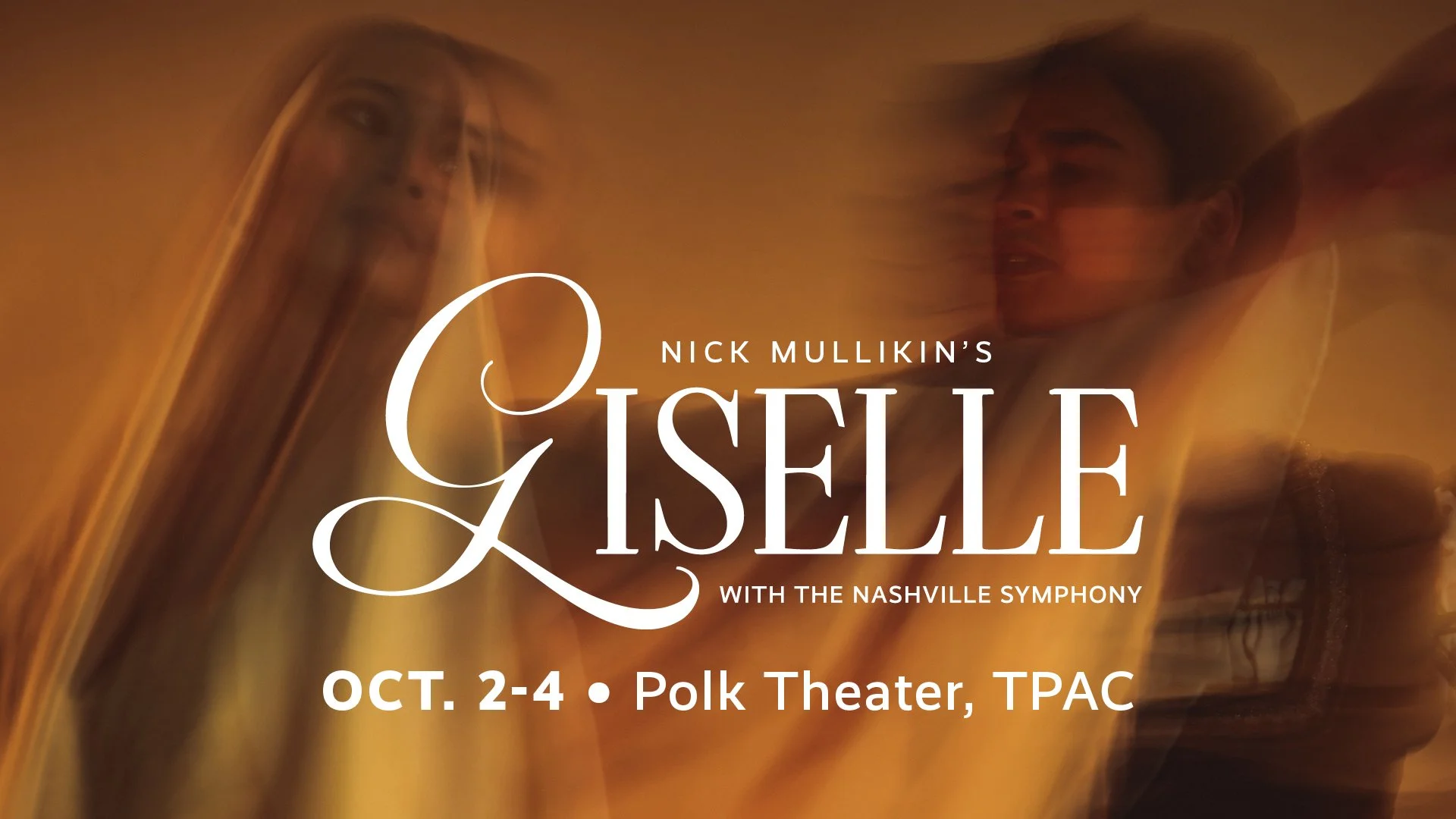
For nearly two centuries, Giselle has ended with forgiveness. This fall, Nashville Ballet's Artistic Director and CEO Nick Mullikin is asking audiences to consider what happens when our actions have consequences.
Mullikin unveils his first full-length ballet with a bold new adaptation of the classical masterpiece Giselle, Oct. 2 - 4 at TPAC’s Polk Theater. The production marks the ballet’s first Nashville staging since 2009 and will be dedicated to the memory of Martha Rivers Ingram, whose extraordinary leadership, philanthropy and vision helped shape Nashville’s cultural landscape and Nashville Ballet for decades.
One of classical ballet’s most enduring works, Giselle returns with new choreography, refreshed sets and costumes and a reimagined conclusion that alters a pivotal element of the traditional story — the fate of Albrecht, the man whose deception ultimately leads to Giselle’s death. Nashville Ballet’s Music Director and Principal Conductor, Ming Luke, along with The Nashville Symphony, brings Adolphe Adam’s iconic score alive to support Mullikin’s adaptation and its new dramatic conclusion.
The role of Giselle will be performed by Jamie Kopit and Colette Tilinski, with James Lankford and Garritt McCabe performing the role of Albrecht. The role of Myrtha will be performed by Marissa Stark and Colette Tilinski.
“Classical works endure because they give each generation an opportunity to see something different in them,” said Nick Mullikin. “For me, Giselle became a story about the ripple effect of our choices. Albrecht’s deception doesn’t affect only him and Giselle, but it changes the lives of everyone around them. I wanted the ending to acknowledge those consequences and for all of us to feel the weight behind our actions. We aren’t changing the heart of Giselle; we’re looking at this extraordinary story through the lens of who we are today.”
Rooted in folklore, Giselle tells the story of a young village woman who falls deeply in love with Albrecht, unaware that he is a nobleman disguised as a commoner and already promised to another woman. When his deception is revealed, Giselle is devastated and dies of a broken heart. The ballet’s second act moves from the human world into the haunting supernatural realm of the Wilis, ghostly spirits of women betrayed before their wedding days. Led by the formidable Myrtha, the Wilis seek vengeance against men who enter their moonlit domain by forcing them to dance to their deaths.
Mullikin uses its final moments to pose a contemporary question within the framework of the Romantic-era classic: What responsibility do people bear for the consequences their decisions create in the lives of others?
The production represents a significant artistic milestone for Mullikin, who has created approximately 15 ballets throughout his career but has never before choreographed a full-length work. His interpretation combines the classical foundation, supernatural beauty and dramatic storytelling that have made Giselle a cornerstone of the ballet repertoire with a perspective created specifically for Nashville Ballet and its audiences.
Reimagining a classic is also not unfamiliar territory for Nashville Ballet. Under Mullikin’s artistic leadership, the company continues to honor the foundation of classical ballet while exploring how familiar stories can speak to contemporary audiences in new ways.
Giselle will be presented Oct. 2-4, 2026, at TPAC’s Polk Theater, with tickets on sale now at www.NashvilleBallet.com.
ABOUT HONORING MARTHA RIVERS INGRAM:
The return of Giselle to Nashville’s main stage will also celebrate the remarkable life and legacy of Martha Rivers Ingram, a visionary arts advocate whose influence on Nashville Ballet and the city’s cultural community spanned decades.
Ingram’s relationship with Nashville Ballet reached back nearly to its beginnings through her service to Nashville City Ballet and, later, Nashville Ballet. Her impact extended across Nashville’s performing arts community, including her instrumental role in helping make the Tennessee Performing Arts Center a reality.
“Martha understood what it meant to take an idea and give it form,” Mullikin said. “She imagined Nashville as a great cultural community and then brought together the people, resources, determination and generosity necessary to help make that vision real.”
Dedicating Giselle to Ingram carries particular significance as Nashville Ballet returns to a TPAC main stage with a new vision for one of classical ballet’s most celebrated works, honoring a woman whose own vision helped create the cultural community in which Nashville Ballet continues to thrive today.